A complete breakdown of the Spanish residency types available right now: requirements, conditions, documents, pros and cons.

90% of people put the decision off for years before they even start applying for Spanish residency. Usually it's because of false beliefs or the feeling that it's complicated and, in their particular case, impossible
"We have to earn a lot to get approved." But that's actually not true. There are Spanish residence permits that require you to prove an income of less than €3,000 a month, as is the case with the Digital Nomad
"We need to buy expensive property to get access to residency, or invest a lot of money." That's not true either, because Spain has a residence permit that only requires you to hold a certain amount in an account at any bank (other than banks in Belarus and Russia) plus a business plan
"We want a European education for our children, but we think relocating the whole family at once is almost unrealistic." That's not true either, because you can, in fact, easily add family members to your chosen residence permit
That's exactly why it's so important to understand all the nuances, so you don't make the wrong choice of residency — a choice that depends on your income, the number of applicants, your goal and your current place of residence
Let's talk in more detail about what Spanish residency gives you:
Spanish residency is one of the most accessible options for CIS citizens among all EU countries
The statistics confirm it: in 2025 alone, more than 30,000 residence permits were approved for Russian citizens. As a result, because of the large number of applications heavily overloading the immigration centres, important changes took place:
Despite these changes, Spain remains the most accessible country for obtaining EU residency. The main task is to do it without losing time, money and nerves. A mistake in choosing the type of residency can cost you thousands of euros or even several years — which is exactly why people come to us, because they know we'll get them to that coveted card no matter what
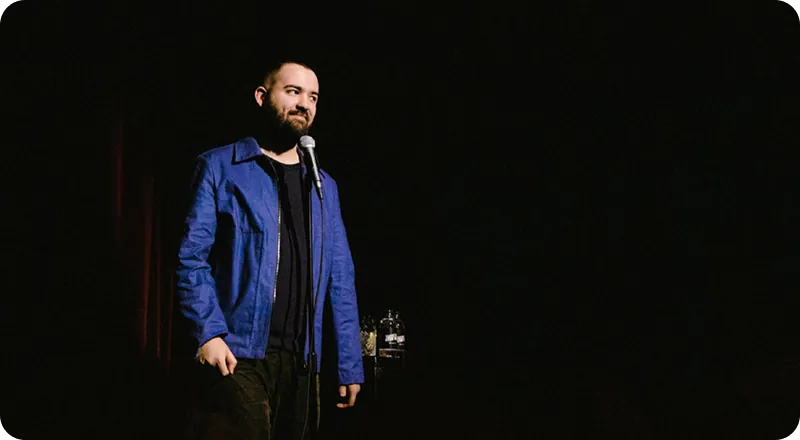
He came to us because of visa problems — the French dragged him through a ton of paperwork for a talent visa and ended up refusing him. So he decided to try Spain
At the consultation we selected the Digital Nomad residence permit for him and began preparing the application. We gathered all the documents, including the criminal record certificate. He applied on 11 July, made it to a MUSE concert right before submitting, and on 7 August received approval
So let's look at exactly which types of Spanish residency exist today, along with their pros, cons and pitfalls:
You live peacefully in Spain, travel, and your children study for free
You cannot work in Spain, and your income must come from abroad. On top of that, since May 2025 this type of residence permit can only be renewed if you actually live in the country at least 183 days a year — and in that case you have to pay tax on your income
- With a Startup visa you can work in Spain or build a business. You can also add your family, who will likewise gain the right to work
- And through renewing the residency you can reach permanent residency in 5 years. You are also not required to live in the country 183 days a year,
unlike the No Lucrativa
It's the business plan with an innovative component. The most common reason for refusal of a Spanish startup residence permit is when the business plan doesn't offer a product or service that is unique to the Spanish market or significantly superior to what already exists. At ReloSpain we know how to write a business plan that will definitely pass approval, which is why we handle the entire residence-permit process from start to finish
Here's an example from our practice: our client Anastasia was looking for a chance to work on Spanish television, obtained a startup residence permit through us, and some time later not only worked on Spanish TV but fulfilled a long-held dream — she performed on the show "The Voice"

Income of at least €2,849/month from abroad (lower than in other countries — Greece or Portugal, for example), and a remote work format
Follow-up requests, which have become more frequent since late 2024. Most often they arise because the consulate asks to confirm the applicant's professional qualifications. But in reality the reasons for follow-up requests vary. Whereas before they only affected clients whose contracts seemed insufficiently "long-standing," they now reach almost half of all applicants
But we've learned to handle even the most unpleasant follow-up requests:
over 7 months we received 46 follow-up requests, out of which we obtained 46 approvals.
That's a 100% approval record
For example, Marina's story:
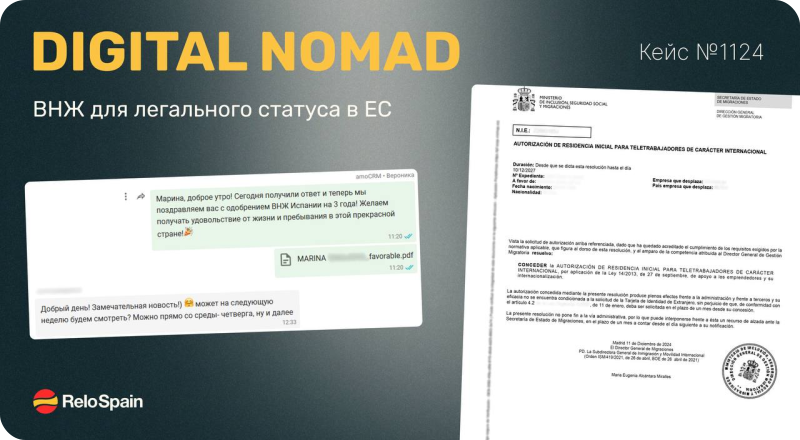
She chose to apply for Spanish residency on the advice of friends — faster to process and simpler to arrange. At the free consultation we helped her decide on the type of residency — we chose the employed Digital Nomad permit for her.
On 25 Nov we uploaded the documents, and on 2 Dec received a follow-up request to confirm her experience. We provided a contract from her previous job and on 11 Dec received approval. The whole process took just 18 days
You might ask — what about freelancers and the self-employed who don't have an employment contract?
In that case there's the option of the Digital Nomad autónomo residence permit
Technically this isn't a residence permit, but a long-term visa for staying in Spain more than 90 days for the purpose of study
This Spanish visa is obtained by students officially studying in the country — language or a degree, it doesn't matter. A student resident may have the right to work, but no more than 20 hours a week
Overall it's a decent choice if you want to get an education in Spain yourself or give one to your children. However, this type of Spanish residency isn't suitable for those planning to move and settle in Spain permanently
Residency by roots is essentially legalisation for those who have been in Spain for a long time without a visa.
It's a kind of reward for already having spent a long time in the country without resident status
Since 20 May 2025 Spain has introduced new types of residency by roots. As of today, Spanish law distinguishes 5 types of arraigo that allow foreigners to legalise their situation within the country. Let's briefly go over each one
@1 Arraigo familiar | Family roots | Available to parents, children or spouses of Spanish or EU citizens who live together with them
@2 Arraigo social | Social roots | For those who are actively integrating into Spanish society and have social ties
@3 Arraigo sociolaboral | Socio-labour roots | Issued where there is employment of at least 20 hours a week
@4 Arraigo socioformativo | Socio-educational roots | For those undergoing professional retraining or studying at institutions or on courses organised by the employment service
@5 Arraigo de segunda oportunidad | Second-chance roots | Intended for former residents who lost their previous status for reasons beyond their control
These are all the residency types currently available on a first application, if you previously had no legal documents allowing you to stay in Spain (not counting a visa)
That's why we recommend turning to our specialists and coming to a strategy session with an immigration expert. You'll find the link at the end of the article
To get the most out of the meeting, it's important to prepare properly.
There's a detailed guide that will help with this
What should you do? Answer the key questions that will help you prepare to analyse your case and choose a Spanish residence permit with us or on your own:
You become a Spanish tax resident if at least one of these criteria is met:
Tax status is determined on the basis of the full calendar year. If you move before the 183 days accrue, residency is usually counted from the start of the year; if later — from 1 January of the following year.
To officially end non-resident tax status or, conversely, register as a resident, you need to file the Modelo 030 form through your personal account on the Agencia Tributaria website.

We hope that after getting all this information you're not thinking, "Well, I'll apply in a year, no big deal." In fact that's a mistake many people make. For instance, those who decided last year to postpone their Spanish residency application to this year unexpectedly ran into the new changes, and also found that moving had become more expensive.
According to experts, housing and living costs rise by an average of 8-12% a year:
Moving belongings and processing documents are also getting more expensive:
At the same time, the requirements for Spanish residency get stricter every year:
For example, the financial requirements for the Digital Nomad permit rose from €2,763/month in 2025 to €2,849 in 2026.
So the later you move, the harder it is to get established and the more money you have to spend. Plus the emotional burnout of living "out of a suitcase" and constantly waiting for better times.
Read also
All articles →
Strictly necessary
Required for the site to function
These cookies are essential for the website to work and cannot be disabled. They remember your language preference and your cookie decision so the banner doesn’t reappear
Analytics & performance
Anonymous visit counting
Let us count visits and traffic sources (search, social, direct) to understand page popularity and improve the site. No personal data is collected
Your rights
You can change or withdraw your consent at any time by clicking «Manage cookies» in the site footer. This is as easy as giving consent. You also have the right to access, correct, or delete your data by contacting us at hello@relospain.com